
📌 Key takeaways
- A key driver of talent retention: the annual review has a direct impact on engagement, with one in two employees leaving their company because of their manager (source: Gallup).
- A strategic moment, not an administrative one: when conducted effectively, it helps align individual goals with corporate strategy whilst boosting motivation and performance.
- Preparation and approach make all the difference: a balance between review and forward-looking discussion, constructive feedback and genuine dialogue are essential to avoid frustration and demotivation.
- AI as a co-pilot for the review: it facilitates preparation and follow-up (data analysis, suggested objectives), whilst leaving the key role of listening and empathy to the human.
The annual review paradox 💡
Every year, thousands of hours are invested in annual reviews. And yet… how many end up as an administrative formality?
For employees: frustration.
For managers: palpable discomfort.
For HR: a bitter reality.
Without support, the annual review becomes a box to tick… when it should be a catalyst for performance and engagement.
Why do managers (still) fail at their annual reviews? ❌
- Lack of preparation : the manager arrives with a grid… but without a clear vision of the employee’s development.
- Unbalanced focus : 80% of the time on the past, only 20% on the future.
- Poorly managed feedback : fear of offending, awkwardness, message poorly received.
- Top-down approach : interview perceived as an examination rather than a dialogue.
Result: demotivation, feelings of injustice… and even avoidable departures.
How should the annual review be perceived? 👀
A successful annual review is not just an assessment, it is:
- A retention tool: remember, 1 in 2 employees leave their company because of their manager (source: Gallup).
- A strategic moment: clarify the strategy and link collective and individual objectives.
- A soft skills exercise: active listening, constructive feedback, courageous conversation.
- A strong signal : if the manager takes this moment seriously, so will the employee.
Training your managers: the investment that changes everything ⭐️
Providing a framework is not enough. What your managers need:
- Concrete techniques for balancing feedback and projection.
Real-life scenarios: reframing, failure to meet objectives, ambition for mobility, etc. - Work on attitude : high standards + kindness.
- Modern tools (digital, AI, memo sheets) to prepare for and follow up on the interview.
Training your managers for the annual review is not a cost: it is an investment in preventing demotivation and staff turnover.
A few practical tips for a successful annual review ⚡️
- Prepare a ‘WOW moment’ : start with some positive feedback that makes an impact. It changes the whole tone of the conversation.
- Ask two magic questions : ‘What made you proud this year?’ and ‘What would you need to be even more successful next year?’
- Take notes in real time (on a simple medium, or even a shared digital one). The employee will see that you are taking what they say seriously.
Conclude with a clear action plan: a maximum of three priorities, dated and followed up on.
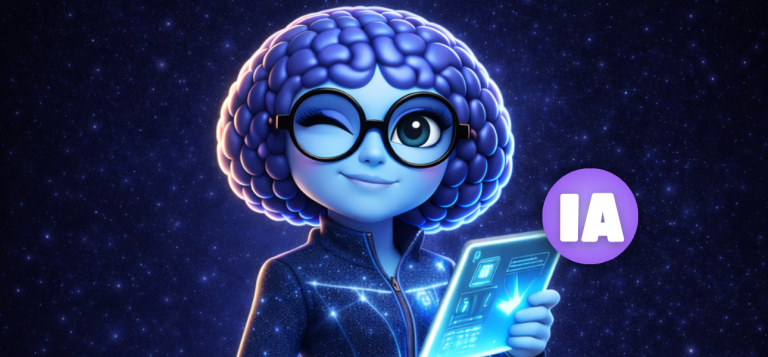
🦾 WHAT'S NEW IN AI: Can AI replace managers in annual reviews?
AI is already being used in annual reviews: it analyses performance data, generates personalised feedback and suggests objectives aligned with strategy. A real time-saver for managers!
But beware : while AI can prepare and enrich the review, it will never replace listening, empathy and human discernment. In short, AI is becoming a co-pilot, not a replacement.
The annual review: a reflection of your management culture 🚀
A successful interview is not measured by the number of boxes ticked, but by what the employee takes away from it :
➡️ ‘I was listened to.’
➡️ ‘I have clear prospects.’
➡️ ‘I know what I need to work on to progress.’