In training, the right answers are often already known.
You need to listen before making a decision. Set a clear course. Prioritise. Delegate. Manage your stress. Share information. Involve teams in the change process. On paper, it all seems obvious.
Then time starts to run out. An emergency arises. Information is contradictory. A colleague questions a decision. Priorities shift along the way.
And knowledge alone is no longer enough.
It is reflexes, habits and behaviours that take over.
This is precisely where the Serious Game comes into its own. Not in opposition to training, but at its very heart.
It enables learning to be put into practice, tested against a real-life situation and gradually transformed into skills that can be applied in the field.
📌 Key takeaways
- The Serious Game transforms knowledge into behaviours that can be applied in real-world situations. 🏃🏻
- Each scenario is designed to meet specific learning objectives: decision-making, cooperation, communication, adaptation or coping with pressure. ⏳
- The debrief is essential for analysing the reactions observed and turning them into concrete courses of action. 👀
- Simulations can be carried out in groups or continued individually using Nova, our conversational AI. 🔴
Soft skills aren’t just something you learn: they’re something you practise 🏃🏻
It is possible to explain the principles of clear communication.
But to make progress, one must also learn how to formulate a message when the situation is tense, time is short, or those involved do not share the same vision.
It is possible to present different leadership styles.
But you also need to practise decision-making, active listening, empowering others and motivating a team in situations where there are several possible responses.
This is what makes soft skills so distinctive.
They draw on knowledge, but also on attitude, emotions, adaptability and a keen understanding of the situation.
Developing these skills therefore involves alternating between input, practice, feedback, analysis and putting them into practice.
The Serious Game fits into this approach. It does not turn training into mere entertainment.
It creates a training ground in which participants apply the methods covered, observe their effects and adjust their practices.
Play creates the situation. Training creates learning. ✨
An immersive scenario alone is not enough to bring about skills development.
What gives a Serious Game its educational value is not just the mission entrusted to the participants, the timer or the plot twists.
It is the way in which the experience is linked to specific training objectives.
Every element of the game must serve an educational purpose.
Incomplete information can help participants practise decision-making under uncertainty. A change in priorities can reveal their ability to adapt. A collective constraint can bring out mechanisms of cooperation. A stress gauge can highlight the consequences of an uneven distribution of the workload.
The scenario puts participants into action.
The trainer, for their part, helps them turn this action into learning.
The debrief: where experience becomes skill 💪🏻
The Serious Game allows you to experience a situation. But it is the debrief that enables you to understand it.
Why did we choose this option? At what point did we lose sight of our objective? What did we do when the pressure mounted?
Who spoke up? Who was not heard? What behaviours strengthened the group’s trust, clarity or effectiveness?
By reflecting on their decisions, participants become aware of their automatic responses.
They then link their observations to the concepts and methods covered during the training.
The debrief enables participants to move from gut feeling to analysis, from mistakes to learning, and from awareness to a concrete action plan.
The Sserious game is therefore not merely a playful interlude in the programme.
It becomes a catalyst for the learning process.
One sport, several skills to practise 🏃🏻
SSerious Games can be adapted to a wide range of training needs. The key is to base the scenario on situations that participants actually encounter.
Here are a few examples of Serious Games that have already been developed.
Developing your leadership skills in a crisis ⚡
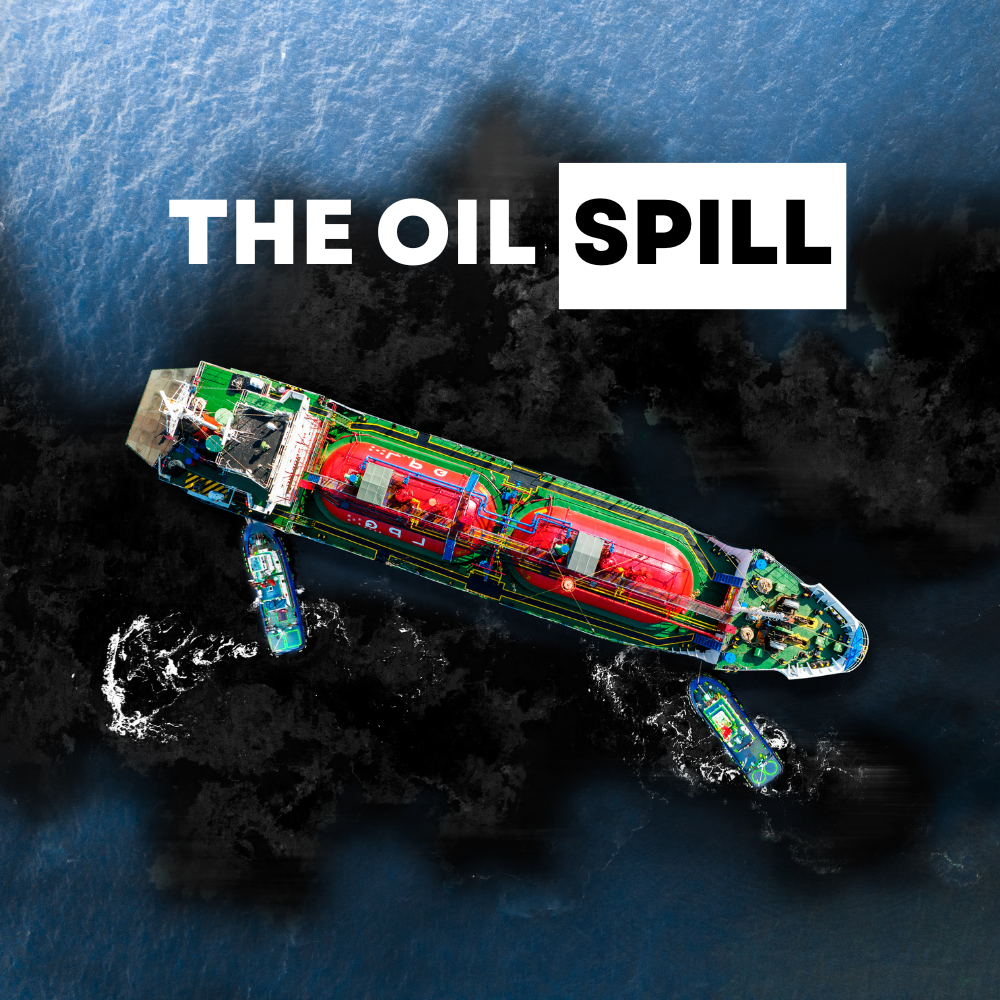
In the Serious Game ‘The Oil Spill’, managers must manage a critical situation, make quick decisions and rally their team. They must also maintain clear communication as the pressure mounts.
The experience helps participants develop hands-on leadership, trust, active listening, accountability, simplification and decision-making.
The game is complemented by structured debriefings and feedback sessions between participants.
Learning to prioritise under pressure 🔥
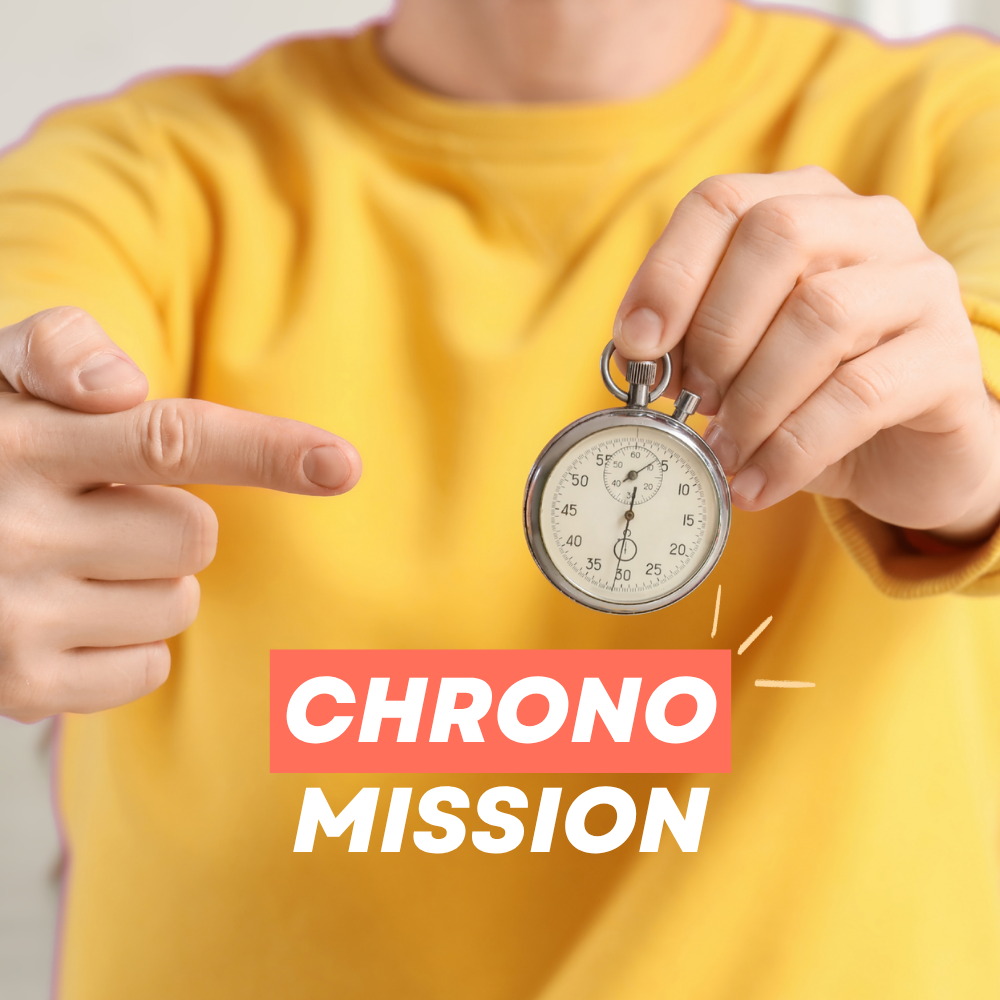
In “Mission Chrono”, teams must manage a day packed with meetings, messages, emergencies and requests. The challenge is not to get everything done.
It is about making trade-offs, identifying high-value-added tasks and applying practical planning and prioritisation methods.
Managing stress in a demanding environment 🌱
In the ‘Keep Calm Challenge’, alerts and unexpected events keep piling up.
Every decision affects the group’s overall stress levels.
Participants try out different coping strategies. They then analyse the impact of anticipation, mutual support, communication and active breaks on the group’s performance.
Strengthening cooperation 🤝
In ‘Mission Hovercar’, participants must coordinate their efforts and share information to achieve a common goal within a limited time.
The game helps to develop trust, teamwork and proactivity.
It also highlights the behaviours that actually facilitate or hinder cooperation.
Extending the simulation using artificial intelligence ✨
The role-play can also continue on an individual basis thanks to Nova, our conversational AI. The learner interacts in real time with a virtual interlocutor in a scenario inspired by their everyday working life: sensitive feedback, customer objections, conflicts, refocusing or decision-making.
Nova adapts its responses to the learner’s answers, creating those pivotal moments when knowledge must become second nature. At the end of the simulation, a detailed report helps identify strengths, areas for improvement and behaviours to work on. It’s a new way to practise between sessions – not as a replacement for the trainer, but as a way of extending the training over time.
Design your own bespoke serious games ☀️
At Groupe DMM, we design Sserious games that are integrated into genuine training programmes.
Each programme is tailored to your specific challenges, your learning objectives and the professional realities faced by your staff.
Leadership, management, cooperation, stress management, organisation, communication or change management: we create scenarios that reflect the participants’ day-to-day experiences.
Because a skill is not simply about what you know.
It is demonstrated by what you are able to achieve, at the right time and in the right context.